
Blog
Walk-In Closets vs Built-In Wardrobes: Which Is Right for You?

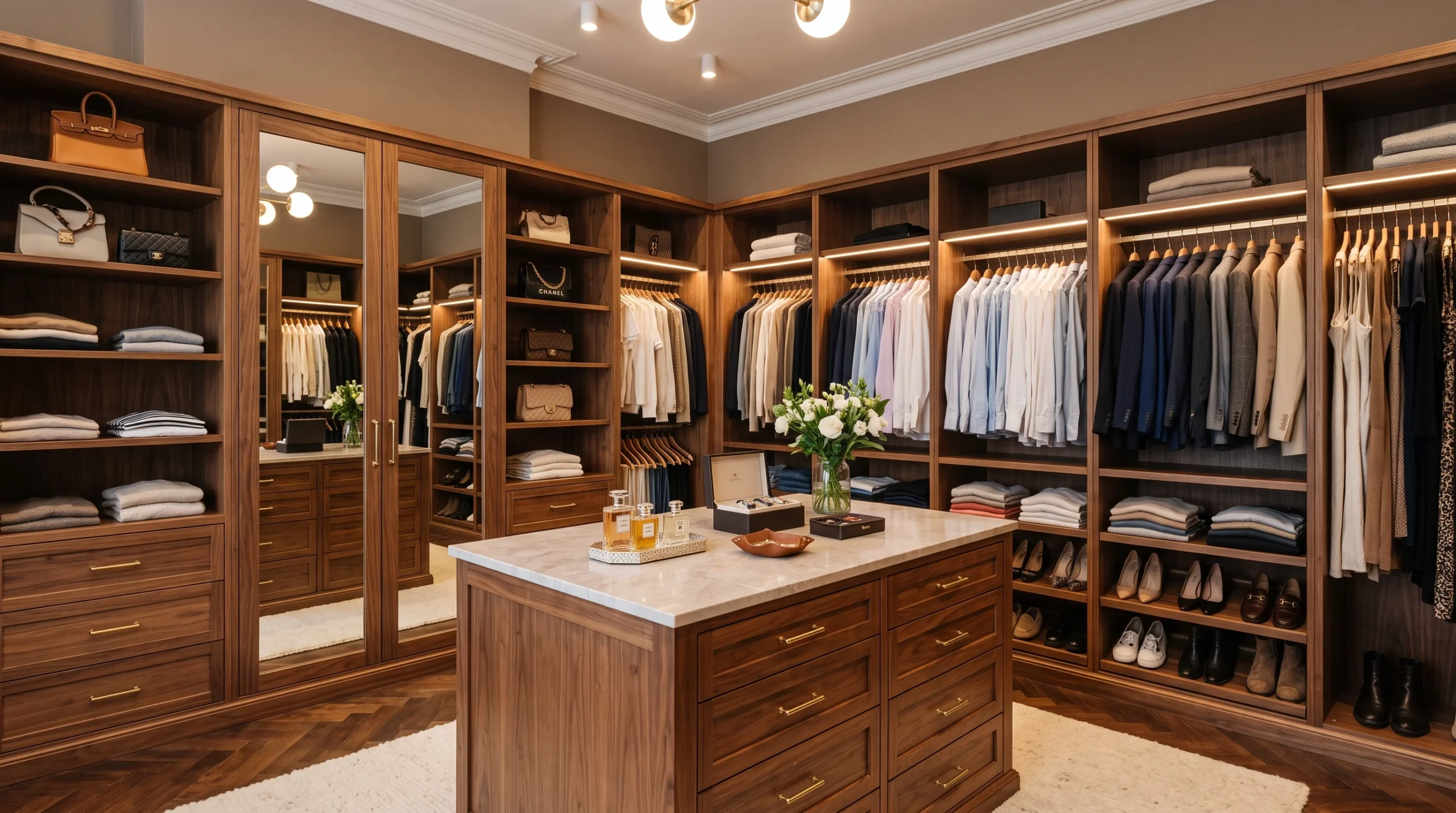
When planning bedroom storage, one of the most common decisions homeowners face is choosing between a walk-in closet and a built-in wardrobe. Both offer custom storage solutions, but they serve different lifestyles, room sizes, and budgets, and understanding the difference can save you from a costly redesign later.
A built-in wardrobe is the more space-efficient option, fitted directly against a wall and often extending floor to ceiling. It works well in bedrooms with limited square footage, since it doesn’t require a separate room or enclosed area. Built-in wardrobes can still be highly customized with sliding or hinged doors, internal drawer systems, mirrored panels, and lighting, giving you a tailored storage experience without sacrificing floor space elsewhere in the bedroom.
A walk-in closet, on the other hand, is a dedicated room or nook exclusively for clothing and accessories. It offers a more immersive, boutique-like experience, letting you browse and organize your wardrobe the way a retail store would. Walk-in closets typically include a mix of hanging rails, shelving, drawer units, and sometimes a central island or seating area. This option is ideal for larger master bedrooms or homes where an adjacent room can be converted into a closet.
Budget is a key factor in this decision. Built-in wardrobes generally cost less since they use less material and require less construction work, while walk-in closets involve more carpentry, lighting, and often flooring changes, making them a bigger investment.
Lifestyle also matters. If you have an extensive wardrobe, love displaying shoes or accessories, or simply enjoy a dedicated dressing space, a walk-in closet delivers a more elevated experience. If your priority is maximizing every square meter in a smaller home, a built-in wardrobe achieves excellent storage without needing extra room.
Many Dubai homeowners find a hybrid approach works best, a compact walk-in closet paired with built-in units along one wall, combining both benefits. Whichever direction you choose, the key is working with a designer who can map out your actual clothing volume and daily routine before finalizing the layout.